

21 May 2026, 19.00-21.00, followed by a reception
Aula Jean Monnet, Parkstraat 51, Leuven
(in English)
How has the current genocidal violence changed our world?
Since 1948, the world has dramatically changed. While the UN in 1948 boldly proclaimed the universality of human rights and radically outlawed genocide, these principles remained constrained by political realities dominated by the Cold War, continuing colonisation, and the prevalence of the nation-state with its homogenising ideal. Still, many newly established states in Asia and Africa introduced political systems that aimed at creating peaceful coexistence of various ethno-religious communities, sometimes after a period of heavy ethno-religious violence. Postcolonial tensions sometimes could not be retained: in Rwanda for example fratricide wars was never far away ultimately culminating in the 1994 genocide. Also communist systems, while suppressing ethno-religious communities, perpetrated mass killings and genocide (Cambodia 1975-79). In the West, such extreme violence, ethnic-religious cleansing and genocide virtually disappeared, and decolonisation and Cold War détente in the 1970s allowed to redefine human rights as key elements of its newfound identity. The end of the Cold War (which seems not to be so final after all) brought ethno-religious cleansing and genocide back to Europe though, while the ‘rise of the rest’, the ‘provincialisation’ of the West and the return of empire today fundamentally destabilise the international order. Liberal and humanitarian values are depreciated and international law contested with renewed intensity.
How do present ongoing genocides – in Gaza, in Sudan – relate to these profound changes in geopolitics, values and the international legal order? What makes that violence turns genocidal, and what can be done and by whom to prevent it? What can be the role of international law?
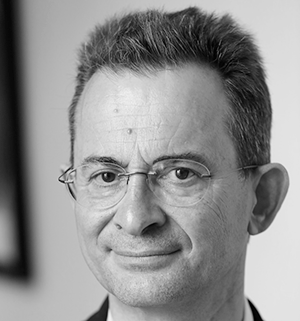
In his Multatuli Lecture 'The End of Genocide Studies? On Crisis, Critique, and Conflation', LIAS fellow Uğur Ümit Üngör (History & Sociology, University of Amsterdam) will address these questions.
A panel discussion will follow, featuring Yuki Miyamoto ( Ethics, DePaul University), Nahed Samour (Law, Radboud University) and Dirk Moses (International Relations, The City College of New York). Peter Vermeersch (LINES, KU Leuven) will moderate the debate.
Register >
This lecture, part of the LIAS project Why genocide? Structures, systems and human responses, is organised in cooperation with Metaforum as a Multatuli lecture.
 Multatuli Lecture
Multatuli's name is inextricably linked to resistance to colonial and neo-colonial injustice and to the confrontation between cultures. In this sense, the Multatuli Lectures relate to North-South relations, global justice and what Western societies owe to other cultures and communities. The theme of the Multatuli Lecture also relates to the challenges of the multicultural societies of the future. You can find an overview of previous lectures here.