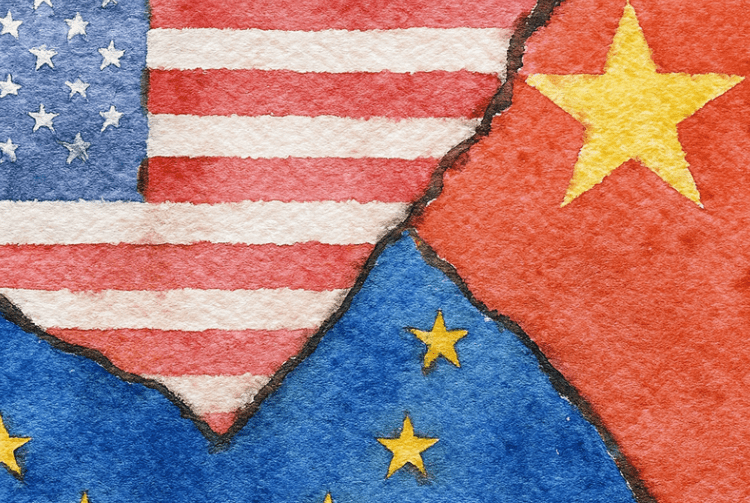
After decades of being relegated to the margins of Western thought, industrial policy is now making a comeback in the US and the EU. Examples of this are the American CHIPS and Science Act and the European Green Deal Industrial Plan. An important factor in this renewed interest in industrial policy is China's use of it for the development of its highly competitive green industries. In the West, this is leading to a somewhat panicky call for protective measures for domestic industry, but also for more policy that actively promotes and supports strategic industries.
Industrial policy does not only mean the targeted selection of winners, but also the provision of public goods and other supporting measures with a view to socially desirable goals such as economic growth, security, competitiveness, innovation or sustainability. However, it is usually not an easy task for governments to choose the ‘right’ winners and the ‘appropriate’ measures. For the Chinese government, too, this remains a story of trial and error, but it has gained experience through the intensive industrial policy of recent decades. Perhaps we can learn something from the mixed results of China's policy experiments.
In this LIAS project, we bring together national and international experts from various research fields, such as Chinese studies, economics, psychology, engineering, political, military and social sciences, to engage in dialogue about the sense and nonsense of industrial policy in the 21st century. Firstly, we will try to learn from the industrial policy experiences of the three largest economies (the US, the EU and China). Secondly, we will look for the deeper causes of the Western return to industrial policy and examine the objectives of current industrial policy in the EU. Thirdly, we will reflect on the characteristics of an optimal industrial policy for the EU (and for Belgium). Which principles are essential? Which sectors should be prioritised? Which instruments are best to use? Which negative effects should we try to avoid, and can this policy also have positive spill-over effects on third countries?